By Team Healthy Mom | Updated: November 2026
Becoming a mother is beautiful, but it is also confusing. One day you are celebrating your baby’s arrival, and the next day you are Googling everything – why is my baby crying, why is my baby gassy, and did I eat something wrong?
If your baby cries a lot after feeding, has a rash, green poop, mucus in stool, or seems uncomfortable, your doctor may ask you to try a dairy free diet for breastfeeding moms. At first, it sounds scary. No milk? No cheese? No butter? What will I eat?
Don’t worry. You are not alone. Thousands of new moms go through this every day, and most of them say the same thing after two weeks: My baby feels so much better, and I feel lighter too.
In this complete guide, we will explain what a dairy free diet while breastfeeding really means, what to eat, what to avoid, how to keep your calcium up, a full 7-day meal plan, the pros and cons, and what doctors actually say. This is a human, honest guide – not a boring medical book.
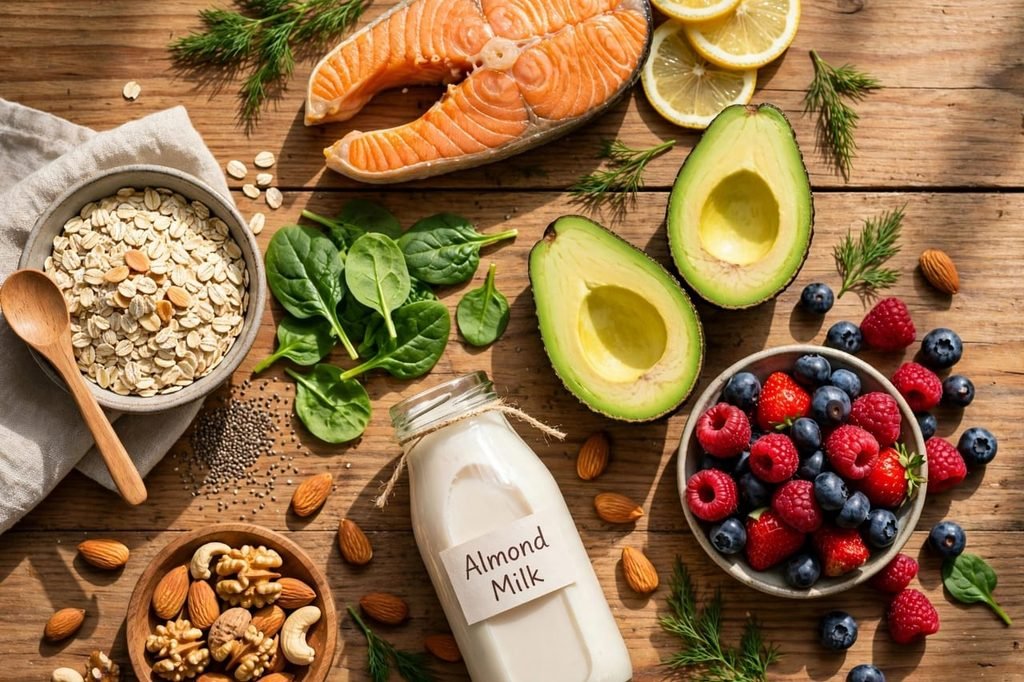
Table of Contents
What Is a Dairy Free Diet for Breastfeeding Moms?
A dairy free breastfeeding diet simply means you stop eating anything that comes from cow’s milk, goat’s milk, or sheep’s milk while you are breastfeeding.
That includes milk, cheese, butter, yogurt, cream, ice cream, ghee, and many hidden foods like biscuits, cakes, chocolate, and pizza.
Why do moms do this? Because cow’s milk protein, called casein and whey, can pass through your breast milk in very small amounts. Most babies are totally fine with it. But some babies are sensitive to it.
If your baby has cow’s milk protein allergy, also called CMPA, even a tiny amount can cause crying, gas, eczema, blood in stool, or reflux.
A dairy free diet does not mean a milk-free life forever. For most moms, it is temporary – usually for 2 to 4 weeks to test, and then you slowly reintroduce dairy under your doctor’s guidance.
Why Would a Breastfeeding Mom Go Dairy Free?
You do not need to go dairy free just because someone on Instagram told you to. You should only do it if there is a real reason.
Here are the most common reasons:
1. Cow’s Milk Protein Allergy (CMPA)
This is the number one reason. Baby shows symptoms like blood or mucus in stool, severe eczema, vomiting, or poor weight gain. Your pediatrician may suggest an elimination diet.
2. Baby Has Colic and Gas
Some babies cry for 3+ hours a day. When mom removes dairy, the gas and crying often reduce within 7 to 14 days. Not always, but often enough that doctors try it.
3. Baby Has Eczema or Rash
Dairy sensitivity can sometimes show up on the skin. If creams are not working, diet is the next step doctors check.
4. Baby Has Reflux
Spitting up a lot, arching back, and being uncomfortable after feeds can sometimes get worse with dairy.
5. Mom Has Dairy Intolerance
Sometimes mom herself feels bloated, has acne, or stomach pain after dairy. When mom feels better, feeding becomes easier too.
Important: Do not cut dairy on your own if your baby is gaining weight well and seems happy. Always talk to your pediatrician first.
Dairy Free Breastfeeding Diet – What to Eat
This is the fun part. Dairy free does not mean tasteless. In fact, many moms discover new foods they love.
Best Dairy Free Foods for Breastfeeding Moms
1. Oats
Oats are a superfood for breastfeeding moms. They help with milk supply, keep you full, and are naturally dairy free. Make oatmeal with almond milk, banana, and honey.
2. Salmon and Other Fatty Fish
Salmon gives you DHA, omega-3, and protein. DHA is very important for your baby’s brain development. Eat salmon 2 times a week.
3. Leafy Greens
Spinach, kale, methi, and sarson are full of calcium, iron, and folate. They are perfect for dairy free moms who worry about calcium.
4. Eggs
Eggs are cheap, easy, and full of protein and choline. Boiled eggs, omelet with vegetables, or egg curry – all are great.
5. Lentils, Chickpeas, and Beans
Daal is your best friend. Lentils give you iron, protein, and fiber. Chickpeas help with milk supply too.
6. Nuts and Seeds
Almonds, walnuts, chia seeds, flaxseeds, and sesame seeds are rich in calcium and healthy fats. A small handful daily is enough.
7. Fruits
Bananas, mangoes, berries, oranges, and papaya give you vitamins and energy. They also help with constipation after delivery.
8. Dairy Free Milk Alternatives
Almond milk, oat milk, coconut milk, and soy milk are good options. Always choose the one that says Calcium Fortified on the packet.
9. Avocado
Avocado is full of healthy fat and helps keep you full. Add it to toast, salad, or smoothie.
10. Sweet Potatoes and Whole Grains
They give you long-lasting energy. Breastfeeding burns 500 extra calories a day, so you need energy.

What to Avoid on a Dairy Free Diet
This is where most moms make mistakes. Dairy hides in many foods.
Foods You Must Avoid:
- Cow’s milk, goat’s milk, buffalo milk
- Cheese, paneer, mozzarella, cheddar
- Butter, ghee, malai, cream, whipped cream
- Yogurt, curd, lassi, raita
- Ice cream, kulfi, milkshake
- Milk chocolate, white chocolate
- Pizza, burgers with cheese, creamy pasta
- Cakes, pastries, biscuits, rusks made with milk
- Butter naan, milk bread, creamy soups
Hidden Dairy – Read Labels Carefully
Always check labels for these words: Casein, Whey, Lactose, Milk solids, Milk powder, Butter oil, Cream, Curd, Ghee.
If you eat out, ask: Is this cooked in butter or ghee? Many restaurants in Pakistan and India cook in ghee, so always ask for oil.
Pro Tip: In the first week, clean your kitchen. Remove dairy snacks from sight. If it is not in front of you, you will not crave it.
Will a Dairy Free Diet Affect My Milk Supply?
This is the biggest fear of every mom: Will my milk decrease if I stop eating dairy?
The honest answer is: No, if you eat enough.
Milk supply does not depend on cow’s milk. It depends on how often you feed, how much water you drink, how much you rest, and how many calories you eat.
Many moms actually see an increase in milk supply on a dairy free diet because they start eating more oats, lentils, nuts, and water instead of cheese and fried food.
But if you cut dairy and do not replace it with other foods, you will feel weak and your supply can drop. So the rule is simple: Remove dairy, but add more healthy food.
Drink 10-12 glasses of water a day. Eat every 3 hours. Do not skip meals.
How to Get Enough Calcium Without Dairy?
This is the most important question. Breastfeeding moms need 1000 mg of calcium daily.
Here is how to get it without dairy:
- 1 cup fortified almond milk = 300-450 mg calcium
- 1 cup cooked spinach = 240 mg calcium
- 1 cup cooked kale = 180 mg calcium
- 100g sesame seeds (til) = 975 mg calcium
- 1 cup fortified orange juice = 300 mg calcium
- 100g almonds = 260 mg calcium
- 100g sardines or salmon with bones = 300 mg calcium
Many doctors also suggest a calcium + Vitamin D supplement while you are dairy free. Do not start a supplement without asking your doctor, but do ask about it in your next visit.
7-Day Dairy Free Diet Plan for Breastfeeding Moms
Here is a simple, realistic plan. You can repeat it or mix it.
Day 1
Breakfast: Oats with almond milk, banana, and almonds
Lunch: Chicken curry with brown rice and salad
Snack: Apple + handful of walnuts
Dinner: Daal, roti with oil, and spinach
Day 2
Breakfast: 2 boiled eggs, whole wheat toast with avocado
Lunch: Chickpea curry, rice, cucumber raita made with coconut yogurt
Snack: Mango smoothie with oat milk
Dinner: Grilled fish, sweet potato, steamed vegetables
Day 3
Breakfast: Smoothie – banana, oats, peanut butter, oat milk
Lunch: Vegetable pulao with lentils
Snack: Roasted chickpeas
Dinner: Chicken karahi with roti, salad
Day 4
Breakfast: Oats porridge with berries and chia seeds
Lunch: Salmon, quinoa, and steamed broccoli
Snack: Orange + almonds
Dinner: Daal, rice, and sauteed kale
Day 5
Breakfast: Egg omelet with spinach, toast
Lunch: Beef stir fry with vegetables and rice
Snack: Coconut yogurt with fruits
Dinner: Lentil soup with whole wheat bread
Day 6
Breakfast: Pancakes made with oat milk and banana
Lunch: Chicken biryani with salad (no raita or use coconut yogurt)
Snack: Trail mix – almonds, walnuts, raisins
Dinner: Grilled chicken, sweet potato, green beans
Day 7
Breakfast: Oats with mango and coconut
Lunch: Chickpea salad with lemon and olive oil
Snack: Banana + peanut butter
Dinner: Fish curry, brown rice, spinach
This plan is flexible. If you are in Pakistan or India, you can use local foods. The idea is same: protein + whole grain + vegetables + healthy fat in every meal.
Pros and Cons of Dairy Free Diet While Breastfeeding
Let’s be honest. No diet is perfect. Here are the real pros and cons.
Pros:
1. Happier Baby
Many moms see less crying, less gas, and better sleep within 2 weeks. That alone is worth it.
2. Better Skin
Both mom and baby often see clearer skin. Eczema and baby acne can improve.
3. Mom Feels Lighter
Less bloating, less acidity, and more energy. Many moms lose postpartum weight faster because they cut cheese and fried dairy foods.
4. You Learn New Recipes
You discover oat milk lattes, coconut curries, and almond desserts. Your cooking becomes more creative.
5. Better Digestion
If you are lactose intolerant and didn’t know it, you will feel a huge difference.
Cons:
1. It Is Hard in the Beginning
Cravings for cheese, chai with milk, and ice cream are real. First 7 days are the hardest.
2. Eating Out Becomes Difficult
You have to ask about every dish. Family dinners and weddings become stressful.
3. Risk of Low Calcium
If you do not plan well, you can become low on calcium and Vitamin D. This can cause tiredness and hair fall.
4. You May Feel Tired
If you cut too many calories, you will feel weak. You must eat more, not less.
5. Social Pressure
Family may say, You must drink milk to make milk. It is hard to explain to everyone. Stay strong and trust your doctor.
Overall, if your baby needs it, the pros are much bigger than the cons. But if your baby does not need it, do not do it just for trend.
Doctor’s Opinion on Dairy Free Diet for Breastfeeding Moms

We asked pediatricians and dietitians what they recommend, and here is their common advice:
Dr. Sarah Khan, Pediatrician, says: A dairy free diet is a medical tool, not a fashion diet. I only recommend it when a baby shows clear signs of cow’s milk protein allergy – blood in stool, severe eczema, or poor weight gain. If we try it, we try it for 2 to 4 weeks strictly. If baby improves, we continue. If no improvement, we stop and look for another cause. Moms should never feel guilty. You are not causing your baby’s allergy by eating dairy.
A registered dietitian adds: The biggest mistake I see is moms cutting dairy but not replacing calcium and calories. You need 500 extra calories while breastfeeding. Add oats, nuts, lentils, and fortified plant milk. Also, take Vitamin D. Most breastfeeding moms are low in Vitamin D anyway.
Important Medical Note: This article is for general information only. It is not medical advice. Always talk to your pediatrician before starting or stopping any diet while breastfeeding. If your baby has blood in stool, vomiting, trouble breathing, or is not gaining weight, see a doctor immediately.
Common Mistakes to Avoid
- Going dairy free for only 2 days and expecting results – It takes 2 weeks for dairy protein to fully leave your system and your baby’s system.
- Eating soy in large amounts as replacement – Some babies who are sensitive to dairy are also sensitive to soy. Start slow.
- Forgetting to check biscuits and chocolates – Most have hidden milk.
- Not drinking enough water – Water is more important than any superfood.
- Comparing your baby to others – Every baby is different. What worked for your friend may not work for you.
How to Reintroduce Dairy After Elimination?
If your baby improves, your doctor will tell you when to try dairy again.
Usually, you start with baked milk – like a muffin with milk baked in it – because baking breaks down the protein. If baby is fine for 3 days, you move to yogurt, then cheese, then straight milk.
Do this slowly, one food at a time. Keep a diary: What did you eat? How did baby react in next 24 hours?
If symptoms come back, stop and wait 2 more months. Most babies outgrow dairy sensitivity by 12 months.
Final Thoughts – You Are Doing Great
Dear mom, if you are reading this at 2 AM while feeding your baby, let me tell you something: You are doing an amazing job.
A dairy free diet is not easy. It takes patience, planning, and a lot of love. But if it helps your baby sleep better and cry less, it is worth every sacrifice.
Remember: You do not need to be perfect. If you accidentally eat dairy once, don’t panic. Just continue. One mistake does not ruin everything.
Trust your instincts, trust your doctor, and take care of yourself too. A healthy mom means a healthy baby.
You got this, mama.
By Team Healthy Mom
FAQs – Dairy Free Diet for Breastfeeding Moms
Q1. Can I drink tea without milk while breastfeeding?
Yes. You can use almond milk or oat milk in chai, or drink green tea, ginger tea, or black tea. Just limit caffeine to 1-2 cups a day.
Q2. How long does it take for dairy to leave breast milk?
It takes about 2 weeks for cow’s milk protein to fully leave your system and your baby’s system. Some moms see improvement in 5-7 days, but give it a full 14 days.
Q3. Can I eat ghee while breastfeeding on a dairy free diet?
No. Ghee is made from butter, so it still has milk protein. Use olive oil, coconut oil, or vegetable oil instead.
Q4. Will my baby get enough calcium if I don’t eat dairy?
Yes, if you eat calcium-rich foods like sesame seeds, spinach, almonds, fortified plant milk, and salmon. Your doctor may also suggest a calcium supplement.
Q5. Can I eat eggs on a dairy free diet?
Yes. Eggs are not dairy. Dairy comes from milk. Eggs come from chickens. You can eat eggs freely unless your baby is also allergic to eggs.
Q6. What is the best milk alternative for breastfeeding moms?
Oat milk and almond milk are the most popular. Choose one that is fortified with calcium and Vitamin D, and has no added sugar.
Q7. Can dairy free diet increase milk supply?
It does not directly increase supply, but many moms eat more oats, lentils, and water when they go dairy free, which can help supply. Frequent feeding is still the number one way to increase milk.
Q8. When should I stop dairy free diet?
Stop when your doctor tells you. Usually after 2-4 weeks if there is no improvement, or after baby outgrows the allergy, usually by 9-12 months. Do not stop suddenly without guidance.
Q9. Is soy milk safe while breastfeeding?
Yes, in normal amounts. But if your baby is sensitive to dairy, watch for soy sensitivity too. If baby gets worse after soy, tell your doctor.
Q10. Can I eat dairy free chocolate?
Yes, dark chocolate (70%+) is usually dairy free, but always check the label. Milk chocolate is not dairy free.