If you are a new mom and your baby cries after every feed, spits up a lot, has green stools, eczema, or terrible gas, you have probably Googled this question at 2 a.m.: Is it something I ate?
You are not alone. You are not a bad mom. And you are not imagining it.
For some babies, cow’s milk protein from mom’s diet can pass into breast milk and irritate their tiny, immature gut. That is why so many pediatricians now suggest trying a dairy free breastfeeding diet for 2 to 4 weeks to see if things improve.
But here is the real question every mom asks next: If I cut out dairy, then what do I eat? Will I get enough calcium? Will my milk supply drop? Will I be hungry all the time?
This guide answers all of that. It is simple, honest, and made for real moms with no time, little sleep, and a baby in one arm.
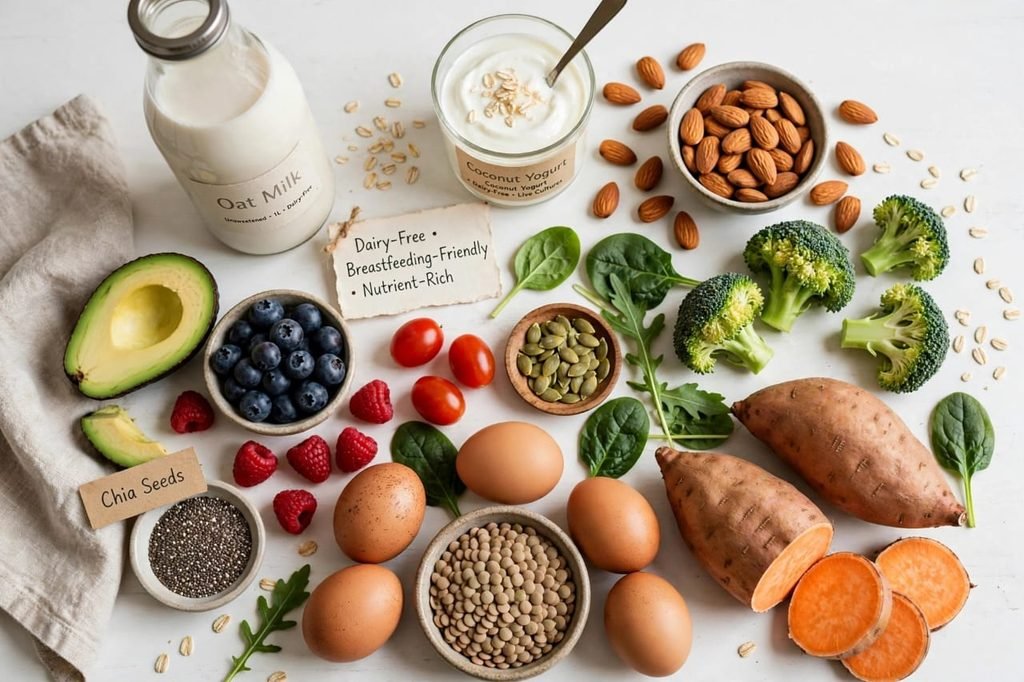
Table of Contents
What Is a Dairy Free Breastfeeding Diet?
It Is Not Lactose-Free, It Is Cow’s Milk Protein-Free
This is the biggest confusion. A dairy free breastfeeding diet does not just mean no milk in your chai or coffee.
It means no cow’s milk protein at all – casein and whey. That includes milk, cheese, butter, ghee, yogurt, cream, paneer, ice cream, and hidden dairy in biscuits, bread, sauces, and chocolates.
Lactose-free milk still has cow’s milk protein, so it will not help if your baby has cow’s milk protein allergy (CMPA). This is why many moms try lactose-free and see no change, then feel hopeless. You did nothing wrong. You just removed the wrong thing.
Why Do Doctors Recommend It?
Doctors do not recommend dairy-free for every breastfeeding mom. They recommend it when baby shows signs like:
- Blood or mucus in stool
- Severe reflux, constant spitting
- Eczema that does not heal
- Excessive crying, colic, arching back after feed
- Green, frothy, or very loose stools
- Poor weight gain
If your baby is happy, gaining weight, and sleeping well, you do NOT need to go dairy-free just for fun. Enjoy your cheese. This diet is a tool, not a trend.
The Positive Side: Why This Diet Actually Helps
1. Happier, Calmer Baby
Most moms see a difference in 7 to 14 days. Less crying, less gas, better sleep. One mom told me, “My baby finally slept for 3 hours straight. I cried with happiness.” That is the power of removing the trigger.
2. You Learn What Real Food Is
When you stop eating processed dairy snacks, you start eating more fruits, vegetables, lentils, eggs, nuts, and whole grains. Many moms say their own digestion, skin, and energy improve too.
3. You Become a Label Expert
You will learn to read labels like a detective. That skill will help you for years when you start solids for your baby.
4. It Is Temporary For Most Moms
This is not forever. Most babies outgrow cow’s milk protein sensitivity by 9 to 12 months. Many moms can slowly reintroduce dairy later under doctor guidance. This is a season, not a life sentence.
The Negative Side: The Honest Truth No One Tells You
1. It Is Hard At First
The first week is the hardest. You will miss cheese on pizza, butter on paratha, and chai with milk. You will feel hungry, tired, and emotional. That is normal. You are postpartum, sleep-deprived, and now changing your food. Give yourself grace.
2. Calcium Fear Is Real
Every mom worries: If I don’t drink milk, will my bones weaken? Will my baby get enough calcium? The truth is, you can get calcium without dairy, but you have to plan for it. If you just cut dairy and eat nothing else, you will become deficient. That is why this article gives you a full food list below.
3. Social Pressure
Family will say, “In our time we ate everything and babies were fine.” Friends will offer you cake. It is hard to say no when you are already exhausted. You don’t need to explain your baby’s medical reason to everyone. A simple “Doctor said to try this for a few weeks” is enough.
4. Hidden Dairy Everywhere
Dairy hides in places you would never expect – bakery bread, restaurant curries, protein bars, soups, and even some medicines. You will make mistakes. One slip does not ruin everything. Just start fresh at the next meal.

Dairy Free Breastfeeding Diet – What to Eat: The Complete Food List
Best Calcium-Rich Foods Without Dairy
You need 1000 mg calcium per day while breastfeeding. Here is how to get it without milk:
- Fortified oat milk, almond milk, soy milk – 300 mg per cup
- Sardines with bones – 325 mg per 3 oz
- Tofu made with calcium sulfate – 350 mg per half cup
- Kale, collard greens, bok choy – 100 to 200 mg per cup cooked
- Almonds – 75 mg per ounce, plus healthy fats
- Tahini, sesame seeds – 130 mg per 2 tbsp
- Fortified orange juice – 300 mg per cup
- White beans, chickpeas – 80 to 100 mg per cup
Pro tip: Vitamin D helps your body absorb calcium. Ask your doctor if you need a supplement, especially if you stay indoors most of the day.
Best Protein Foods For Milk Supply
Breastfeeding moms need about 65 to 70g protein per day. Dairy was an easy source, so replace it well:
- Eggs – 2 eggs = 12g protein
- Chicken, turkey, lean beef
- Fish – salmon, sardines, mackerel for DHA and omega-3
- Lentils, chickpeas, black beans
- Peanut butter, almond butter
- Quinoa, oats
If you are vegetarian, combine lentils + rice, or beans + whole wheat bread to get complete protein.
Best Healthy Fats For Baby’s Brain
Your baby’s brain needs healthy fats from your diet:
- Avocado
- Olive oil, coconut oil
- Nuts – walnuts, almonds, cashews
- Seeds – flax, chia, pumpkin
- Fatty fish twice a week
Best Foods For Energy And Iron
Postpartum fatigue is real. Iron helps:
- Spinach, moringa, beetroot
- Red meat, liver once a week if you eat it
- Lentils with lemon – vitamin C helps iron absorption
- Dates, raisins, jaggery in small amounts
Best Dairy-Free Swaps That Actually Taste Good
- Milk for chai/coffee: Oat milk – creamiest, closest to dairy
- Butter for cooking: Coconut oil, olive oil, dairy-free ghee alternative
- Cheese for pizza: Cashew cheese, nutritional yeast for cheesy flavour
- Yogurt: Coconut yogurt, almond yogurt – check for added sugar
- Cream for curries: Coconut cream, blended cashews
- Ice cream: Coconut milk ice cream, frozen banana nice-cream
Don’t buy everything at once. Start with one milk and one butter alternative. Taste, then adjust.
What NOT To Eat On Dairy Free Breastfeeding Diet
Avoid these, even in small amounts:
- Milk, skim milk, condensed milk, milk powder
- Cheese – cheddar, mozzarella, feta, paneer, cottage cheese
- Butter, ghee made from cow’s milk, clarified butter
- Yogurt, curd, buttermilk, lassi
- Cream, sour cream, whipped cream
- Ice cream, custard, pudding, milk chocolate
- Whey, casein, caseinate, lactose in ingredient list – all are dairy
- Bakery items – most breads, cakes, biscuits have milk or butter
- Restaurant gravies, white sauce, soups – ask before eating
Always read: “Contains Milk” at the bottom of the label. If it says that, put it back.
7-Day Dairy Free Meal Plan For Breastfeeding Moms
This is a simple, realistic plan. No fancy ingredients.
Day 1
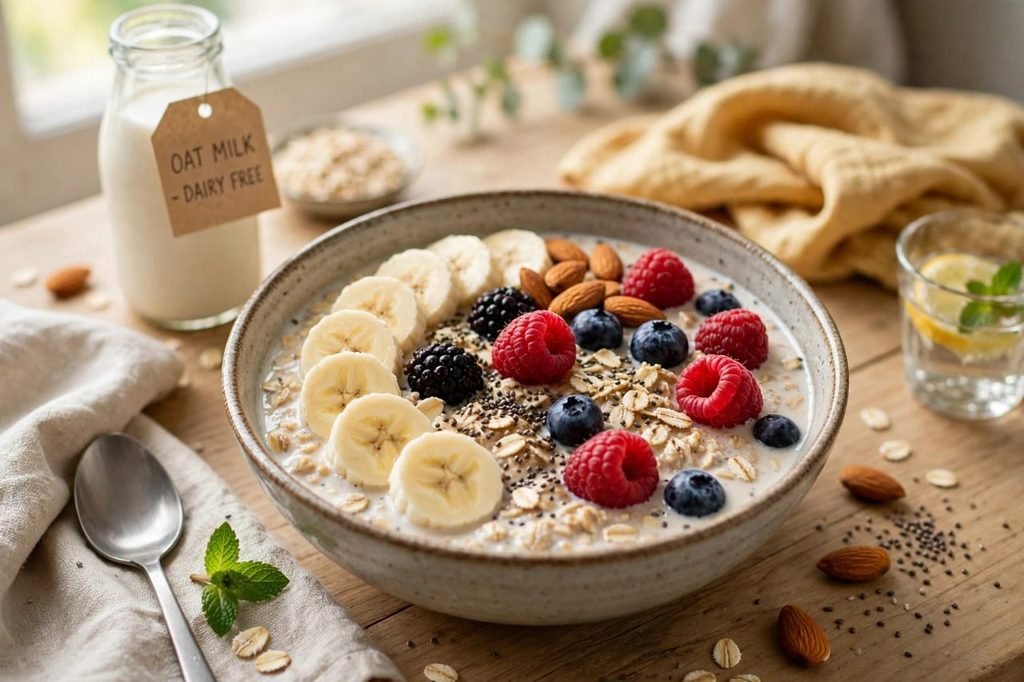
Breakfast: Oats cooked in oat milk + banana + chia seeds + almonds
Lunch: Grilled chicken + brown rice + spinach salad with olive oil
Snack: Apple + peanut butter
Dinner: Lentil soup + whole wheat bread + cucumber
Day 2
Breakfast: Eggs + whole wheat toast + avocado
Lunch: Chickpea curry + rice + yogurt alternative
Snack: Dates + walnuts
Dinner: Baked salmon + sweet potato + broccoli
Day 3
Breakfast: Smoothie – oat milk + mango + spinach + flax seeds
Lunch: Quinoa bowl + black beans + corn + avocado
Snack: Coconut yogurt + berries
Dinner: Chicken stir fry + vegetables + noodles
Day 4
Breakfast: Dairy-free pancakes + maple syrup + berries
Lunch: Tuna salad + whole grain wrap
Snack: Roasted chickpeas
Dinner: Beef + potato + green beans
Day 5
Breakfast: Overnight oats + coconut yogurt + nuts
Lunch: Lentil + vegetable curry + rice
Snack: Banana + almond butter
Dinner: Grilled fish + quinoa + salad
Day 6
Breakfast: Eggs + sweet potato hash
Lunch: Chicken soup + bread
Snack: Trail mix – almonds, raisins, seeds
Dinner: Pasta with tomato sauce + basil + olive oil, no cheese
Day 7
Breakfast: Toast + avocado + egg
Lunch: Chickpea salad + hummus + pita
Snack: Mango + coconut yogurt
Dinner: Family favourite curry made with coconut cream
Drink 10 to 12 glasses of water daily. Keep a water bottle near your nursing chair. Thirst is a sign you are already dehydrated.
Will Dairy Free Diet Affect My Milk Supply?
This is the number one fear. The honest answer: If you eat enough calories, it will NOT drop your supply.
Most moms lose supply not because they cut dairy, but because they cut calories. Breastfeeding needs an extra 400 to 500 calories per day. If you skip meals, your supply will suffer.
Eat every 3 hours. Keep snacks ready. Oats, nuts, and healthy fats actually support supply. Many lactation consultants recommend oats, fenugreek, and plenty of water while on dairy-free.
If you notice a drop, check: Are you eating enough? Are you drinking enough? Are you sleeping at all? Fix those first before blaming dairy-free.
How To Reintroduce Dairy Later
Do NOT reintroduce on your own if your baby had blood in stool or severe allergy. Always ask your pediatrician.
General process doctors use:
- Wait at least 2 to 4 weeks symptom-free
- Mom eats a small amount of dairy, like yogurt
- Watch baby for 48 to 72 hours for symptoms
- If no reaction, slowly increase
- If symptoms return, stop and wait another month
Keep a food and symptom diary. Write what you ate, when baby cried, stool colour, rash. This diary is gold for your doctor.
Doctor’s Opinion
“A dairy-free diet while breastfeeding can be very helpful for babies with cow’s milk protein allergy, but it must be done correctly. The mother must replace calcium, vitamin D, protein, and calories. I always tell my patients: Do not go dairy-free alone for months. Work with your pediatrician and a dietitian, take supplements if advised, and re-evaluate every 4 weeks. Most importantly, continue breastfeeding. Breast milk is still the best nutrition for your baby, even on a dairy-free diet.” – Pediatric Nutrition Expert
This is general information, not medical advice for your baby. Every baby is different. Please talk to your pediatrician before starting or stopping any diet.
Common Mistakes To Avoid
- Cutting dairy but not replacing calcium
- Eating only salads and feeling starving
- Buying “lactose-free” and thinking it is dairy-free
- Forgetting hidden dairy in biscuits and bread
- Quitting after 3 days because baby still cries – it takes 2 weeks for protein to fully leave your system and baby’s gut to heal
- Comparing your baby to another baby
Be patient. Healing takes time.
FAQs
Can I eat eggs on a dairy free breastfeeding diet?
Yes. Eggs are not dairy. Dairy comes from milk. Eggs come from chickens. Unless your baby also has egg allergy, eggs are safe and excellent for protein.
Is ghee dairy free?
No. Traditional ghee is made from cow’s milk butter. Even though milk solids are removed, trace protein can remain. For CMPA babies, avoid ghee. Use coconut oil or olive oil instead.
Can I drink almond milk while breastfeeding?
Yes, if it is fortified with calcium and vitamin D. Choose unsweetened versions to avoid extra sugar. Oat milk is often creamier for chai and coffee.
How long does it take for dairy to leave breast milk?
Cow’s milk protein can take 1 to 2 weeks to fully clear from your body and baby’s system. Some moms see improvement in 3 to 4 days, most need 14 days. Don’t give up too early.
Will my baby be allergic to dairy forever?
Most babies outgrow it. About 80% outgrow cow’s milk protein allergy by age 1, and almost all by age 3 to 5. Your pediatrician will guide reintroduction.
Do I need calcium supplements on dairy free diet?
Maybe. If you cannot get 1000 mg calcium from food daily, your doctor may suggest a supplement. Do not self-prescribe high doses. Ask for a blood test if you feel tired, cramps, or hair fall.
Can I eat soy while dairy free?
For most moms, yes. But some CMPA babies also react to soy. If baby still has symptoms after 2 weeks dairy-free, your doctor may ask you to cut soy too for a short time.
Final Words For Tired Moms
If you are reading this with a crying baby in your arms, I want you to know: You are doing an amazing job.
Going dairy-free is not easy. It is lonely, tiring, and sometimes you just want a slice of pizza. But you are doing it for your baby. And that love matters more than any perfect diet.
Start small. Change one meal today. Drink water. Eat enough. Ask for help. And remember, this is temporary.
Your baby does not need a perfect mom. Your baby needs a fed, loved, and rested mom. You are already that mom.
Save this guide. Share it with another breastfeeding mom who is struggling tonight. You might just change her 2 a.m. Google search into hope.
Disclaimer: This article is for educational purposes only and is not a substitute for professional medical advice. Please consult your pediatrician or doctor before changing your diet while breastfeeding.