Pregnancy symptoms or period symptoms – how can you tell the difference? Have you ever sat on your bed, staring at the calendar, and wondering – Am I pregnant, or is my period just about to start?
If yes, you are not alone. Almost every woman has been in this exact moment at least once in her life. Your breasts feel tender. You feel tired. You feel moody. You have a little cramp in your lower belly. And your mind keeps asking the same question again and again.
Is this pregnancy? Or is this just PMS?
The truth is, pregnancy symptoms and period symptoms can feel almost exactly the same in the beginning. That is why so many women get confused. And that confusion is completely normal. You are not overthinking. Your body is genuinely sending you mixed signals.
In this guide, we will walk through it together, slowly and clearly. We will talk about the 7 key differences, the small signs most women miss, when to take a test, and what doctors actually say about it. By the end, you will feel much more confident about what your body is trying to tell you.
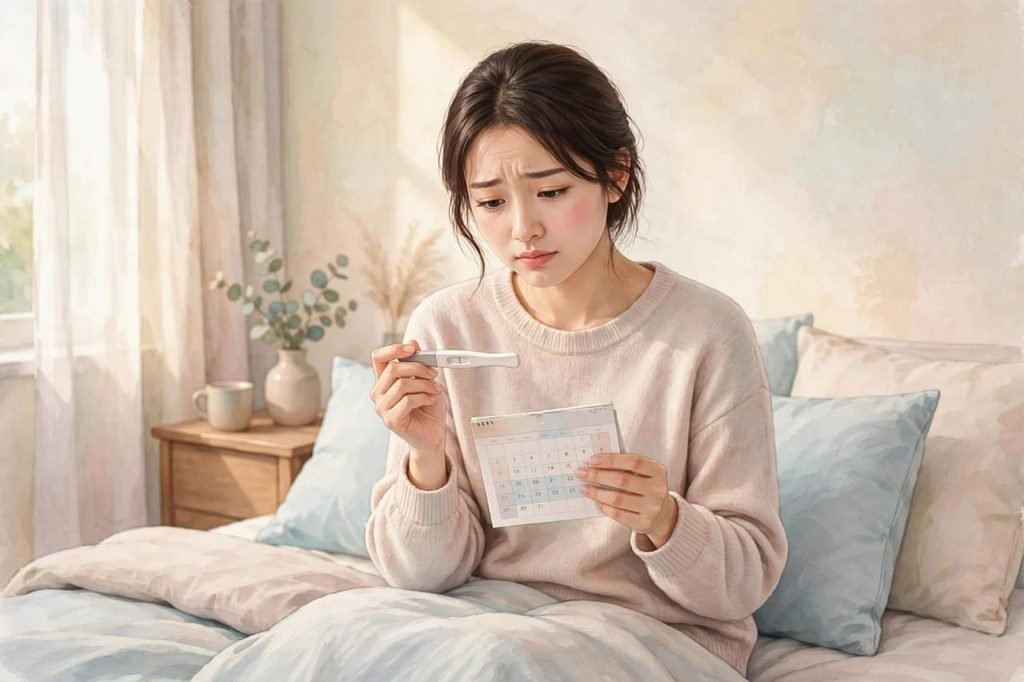
Table of Contents
Why Do Pregnancy and Period Symptoms Feel So Similar?
This is the first thing you need to understand, and once you understand this, everything becomes easier.
Both early pregnancy and PMS are controlled by the same hormones – mainly progesterone and estrogen.
After ovulation, your progesterone level rises. This hormone prepares your uterus for a possible pregnancy. It also causes bloating, breast tenderness, mood swings, tiredness, and mild cramps. Whether you get pregnant or not, this rise happens every single month.
If you are not pregnant, progesterone drops, and your period starts. Your symptoms usually get better once bleeding starts.
If you are pregnant, progesterone stays high, and another hormone called hCG starts to rise. Your symptoms do not go away. In fact, they often get stronger slowly.
So the symptoms are similar because the starting hormones are the same. The difference is in how long they last, how they change, and a few small details that most people ignore.
That is why you cannot decide only on one symptom. You have to look at the full pattern.
The Biggest Difference: Timing Is Everything
If you want one simple rule to remember, remember this: Timing tells you more than any single symptom.
Period symptoms usually start 5 to 10 days before your period, get worse, and then get better once your period starts.
Pregnancy symptoms usually start around the time your period is due, or a few days after your missed period, and they do not go away. They stay, or they slowly increase.
Let me give you a real-life example.
Sara, 27, told me she felt cramps and thought her period was coming. She waited 2 days. No period. On day 3, she still felt tired and her breasts were still sore. On day 5, she started feeling nauseous in the morning. That was the moment she realized – this is not my normal PMS. Her PMS never lasted that long.
That is the pattern. PMS comes and goes. Early pregnancy stays.
So ask yourself: Are my symptoms getting better or staying the same? Are they lasting longer than usual?
If your period is 3 to 5 days late and symptoms are still there, that is a strong sign to take a pregnancy test.
7 Key Differences Between Pregnancy Symptoms and Period Symptoms
Now let’s go into detail. We will compare each symptom side by side, so you can actually tell the difference.
1. Cramps: Light and Short vs Heavy and Strong
This is the most confusing one.
Period cramps are usually stronger. They start 1 to 2 days before your period, get worse on day 1 and 2, and then slowly fade. Many women describe them as a heavy, pulling pain in the lower belly and lower back.
Pregnancy cramps, also called implantation cramps, are usually much lighter. They feel like a mild pinch, a flutter, or a very light pulling sensation. They last only a few minutes to a few hours, and they often come and go. They usually happen 6 to 12 days after ovulation, which is before your missed period.
Positive side: If your cramps are very light and disappear quickly, it could be implantation.
Negative side: If your cramps are getting stronger every hour and you feel heavy pressure, it is more likely your period is coming.
2. Bleeding: Heavy Flow vs Light Spotting
This difference is very important.
Period bleeding starts light, becomes heavy, and lasts 3 to 7 days. You need pads or tampons. The blood is usually bright red or dark red.
Implantation bleeding in early pregnancy is completely different. It is very light – just a few drops, or light pink or brown spotting on your underwear. It lasts only a few hours to 1 or 2 days. You usually do not need a pad, only a panty liner.
If you see heavy bleeding with clots, it is most likely your period. If you see only light pink or brown spotting and then it stops, it could be implantation.
But be careful – not every pregnant woman gets implantation bleeding. About 1 in 4 women get it. So if you do not see it, it does not mean you are not pregnant.
3. Breast Changes: Sore and Then Better vs Sore and Getting More Sensitive
Both PMS and pregnancy make breasts tender. But the feeling is slightly different.
In PMS, your breasts feel heavy, full, and sore. Once your period starts, the soreness usually goes away within 1 to 2 days.
In early pregnancy, your breasts feel more sensitive, tingly, and tender to touch. The area around your nipples, called the areola, may become darker. Your breasts may feel heavier week by week, not better.
Many women say: In PMS, my breasts hurt when I press them. In pregnancy, even my bra touching them felt uncomfortable.
That increasing sensitivity is a key clue.
4. Nausea: Rare in PMS, Common in Pregnancy
This is one of the clearest differences.
Nausea is not a common PMS symptom. Some women feel a little nauseous before their period because of cramps, but it is usually mild and goes away quickly.
In pregnancy, nausea, often called morning sickness, is very common. It can start as early as week 4 to 6. It is not only in the morning – it can happen any time of day. Certain smells, like cooking oil, coffee, or perfume, can suddenly make you feel sick.
If you are feeling nauseous for 3 to 4 days in a row, especially with a missed period, it is more likely pregnancy than PMS.
Positive side: Nausea in early pregnancy is actually a good sign. It means your pregnancy hormones are rising well.
Negative side: It can make you feel exhausted and unable to eat. That is hard, but it usually gets better after the first trimester.
5. Tiredness: A Little Tired vs Extremely Exhausted
Everyone feels a little tired before their period. That is normal.
But pregnancy tiredness is different. It is a deep, heavy exhaustion. You can sleep 8 hours and still feel like you need more sleep. You feel sleepy in the afternoon. You cannot concentrate. Even small tasks feel heavy.
Why? Because your body is working very hard to build a placenta and support a new life. Your progesterone is very high, your blood volume is increasing, and your body is using more energy than usual.
If you suddenly feel exhausted for no reason, and your period is late, pay attention to that.
6. Mood Swings: Irritable Before Period vs Emotional and Sensitive
Mood swings happen in both cases, but the type of mood is different.
Before a period, many women feel irritable, angry, and impatient. They want to be alone. They feel annoyed at small things.
In early pregnancy, many women feel more emotional, sensitive, and tearful. They cry at a movie. They feel overwhelmed. They feel anxious and excited at the same time.
Of course, every woman is different. But if you notice you are crying more easily than usual, or feeling very sensitive, it could be early pregnancy.
7. Food Cravings and Smell Sensitivity: Wanting Chocolate vs Hating Your Favourite Food
Before your period, you might crave chocolate, salty snacks, or carbs. That is very common.
In pregnancy, cravings are also common, but there is a new twist: food aversions. You may suddenly hate a food you normally love. For example, many pregnant women suddenly cannot stand the smell of chicken, eggs, or garlic. The smell alone makes them feel sick.
This strong smell sensitivity is a very strong pregnancy sign. PMS does not usually cause this.
If you suddenly feel like your kitchen smells strange, or your favourite perfume smells too strong, that is your hormones talking.
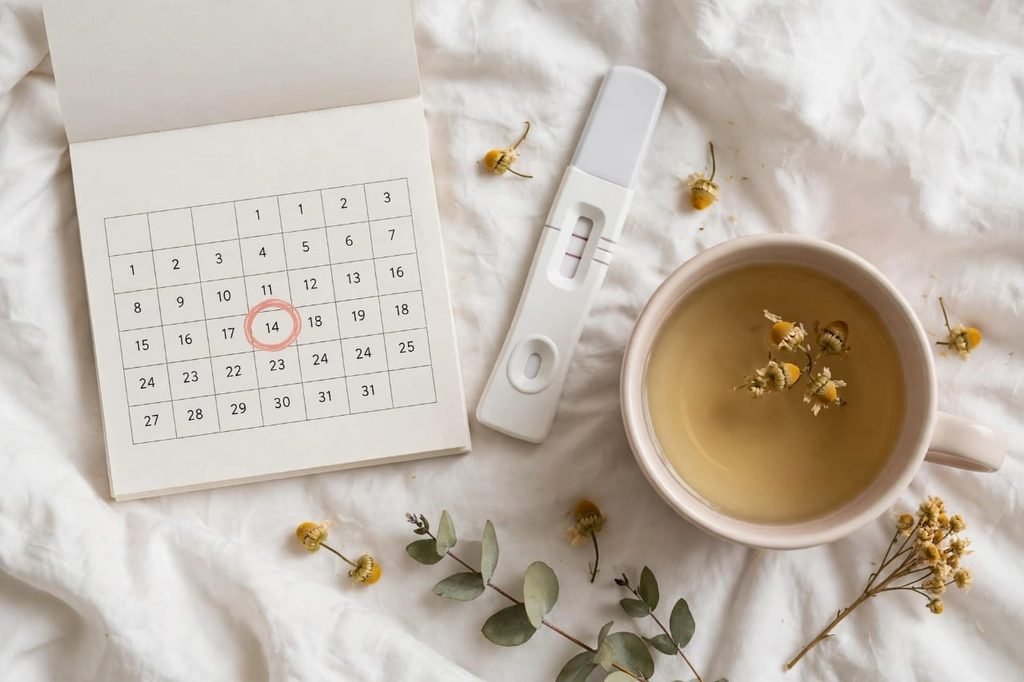
A Simple Table To Remember: Pregnancy vs Period At A Glance
Here is a quick table you can save or screenshot:
| Symptom | Period / PMS | Pregnancy |
|---|---|---|
| Cramps | Strong, heavy, 1-3 days | Light, short, comes and goes |
| Bleeding | Heavy, red, 3-7 days | Light pink/brown spotting, 1-2 days |
| Breasts | Sore, then better after period | More sensitive, darker nipples, stays sore |
| Nausea | Rare, mild | Common, can last days |
| Tiredness | Mild tiredness | Deep exhaustion |
| Mood | Irritable, angry | Emotional, tearful, sensitive |
| Smell | Normal | Very sensitive to smells |
| Period | Starts on time | Missed or very late |
Keep this table in mind. It will help you decide quickly.
The Positive and Negative Sides Of This Confusion
Let’s be honest about both sides, because this waiting period is not easy.
The Positive Side
The good news is, your body is working. These symptoms mean your hormones are active. Whether it is PMS or pregnancy, your body is doing its job.
If you are trying to conceive, this waiting time, often called the two-week wait, is actually a sign of hope. Your body is giving you signals. Learning to read them makes you more connected to your body.
And if it is just PMS, that is also good news. It means your cycle is regular. Your body is healthy. You will get another chance next month.
The Negative Side
The hard side is the emotional stress. Waiting, checking, googling symptoms at 2 am, taking a test too early and seeing a negative – it is exhausting.
Many women say the worst part is not the symptoms, it is the not knowing. You feel hopeful one minute and disappointed the next. That emotional rollercoaster is real, and it is okay to feel that way.
You are not being dramatic. You are being human.
My advice: Do not check symptoms every hour. Give your body time. Stress itself can delay your period, which makes the confusion even worse. Try to stay calm, drink water, rest, and wait for the right time to test.
When Should You Take A Pregnancy Test?
This is the most important practical question.
Do not test too early. If you test before your missed period, you may get a false negative, even if you are pregnant. That is because hCG is still too low to detect.
Best time to test:
- On the first day of your missed period, or 1 to 2 days after.
- Use first morning urine, because it has the highest hCG.
- If the first test is negative but your period still does not come after 3 to 4 days, test again.
Home pregnancy tests today are 99% accurate if you use them correctly and at the right time.
If you get a faint line, do not panic. A faint line is still a positive line. It just means your hCG is still low. Wait 2 days and test again. The line should get darker.
If you get a negative but still no period after a week, see your doctor. There could be other reasons for a late period, like stress, thyroid, PCOS, or a change in weight.
What About Early Pregnancy Symptoms Before Missed Period?
Some women do feel symptoms very early, even before a missed period. These are called first symptoms of pregnancy.
They can include:
- Light implantation spotting
- Very light cramps
- Breast tenderness that feels new
- Feeling very tired
- Slight nausea
- Frequent urination
- A metallic taste in the mouth
But remember – these are also very similar to PMS. So early symptoms alone cannot confirm pregnancy. Only a test or blood test can confirm it.
If you want to learn more about the very first signs, read our guide on First Symptoms of Pregnancy – Early Signs You Should Know. It will help you understand the earliest signs in more detail.
When To See A Doctor – Do Not Ignore These Signs
Most of the time, PMS and early pregnancy are normal and not dangerous. But there are some signs where you should see a doctor quickly.
See your doctor if you have:
- Very heavy bleeding with large clots
- Severe pain on one side of your belly
- Fainting or severe dizziness
- Fever over 100.4°F with pelvic pain
- Positive pregnancy test with severe pain or bleeding
- No period for more than 2 months and negative tests
- Severe vomiting and you cannot keep water down
These could be signs of ectopic pregnancy, miscarriage, infection, or another condition that needs urgent care. Do not wait and google. Go to your doctor.
Your health is more important than any article.
Doctor’s Opinion: What Doctors Really Say
We asked doctors what they tell their patients about this confusion, and their answer is very simple and reassuring.
Doctors say: Symptoms alone are never enough to diagnose pregnancy. We have seen women with all the symptoms who were not pregnant, and women with no symptoms at all who were pregnant. Every body is different.
A doctor will usually advise:
- Track your cycle for at least 3 months. Know your normal pattern.
- Wait for your missed period before testing.
- If the test is positive, book your first prenatal visit within 1 to 2 weeks.
- Take folic acid daily if you are trying to conceive.
- Do not take any medicine without asking your doctor if you think you might be pregnant.
As one gynecologist explains: The best way to know is not your symptoms, it is your test. Symptoms can guide you, but the test gives you the answer. Be patient with your body. It is doing something amazing.
That is the most important advice in this whole article. Trust the test, not just the symptoms.

What To Do While You Are Waiting?
While you are in this waiting period, here is a simple, gentle plan:
- Do not take a test every day. It only increases stress.
- Eat healthy, drink water, and get enough sleep.
- Avoid alcohol, smoking, and unnecessary medicines.
- Start taking folic acid if you are trying for a baby.
- Write down your symptoms each day. It helps your doctor later.
- Talk to someone you trust. Do not carry the worry alone.
And most importantly – be kind to yourself. Whether this month brings a positive test or a period, you are okay. Your worth is not in a test result.
Frequently Asked Questions (FAQs)
Can you have pregnancy symptoms before a missed period?
Yes. Some women feel breast tenderness, light cramps, tiredness, and spotting 6 to 12 days after ovulation. But these are very similar to PMS, so they cannot confirm pregnancy alone. You need a test after your missed period.
Can period symptoms feel like pregnancy?
Yes, absolutely. PMS can cause cramps, breast pain, mood swings, bloating, and tiredness – all of which also happen in early pregnancy. That is why so many women get confused. The key difference is timing and how long symptoms last.
How early can you tell if you are pregnant vs PMS?
The earliest you can get a reliable answer is on the day of your missed period with a home test. A blood test at your doctor’s office can detect pregnancy 6 to 8 days after ovulation, even earlier than a home test.
Is implantation bleeding different from period bleeding?
Yes. Implantation bleeding is very light, pink or brown, lasts 1 to 2 days, and does not need a pad. Period bleeding is heavier, red, lasts 3 to 7 days, and needs pads or tampons.
Can stress delay your period and cause pregnancy-like symptoms?
Yes. High stress can delay ovulation and delay your period. It can also cause tiredness, mood swings, and breast tenderness. That is why doctors say to stay calm during the two-week wait.
What if my test is negative but I still have no period?
Wait 3 to 4 days and test again. If it is still negative and your period is more than a week late, see your doctor. There could be other reasons like thyroid issues, PCOS, stress, or weight change.
Can you be pregnant and still get your period?
You can get light spotting in early pregnancy, but true heavy period bleeding usually does not happen in pregnancy. If you have a positive test and heavy bleeding, see your doctor immediately.
When should I see a doctor if I think I am pregnant?
If your test is positive, book an appointment within 1 to 2 weeks. If you have severe pain, heavy bleeding, dizziness, or fainting, go to the doctor or hospital immediately.
Final Thoughts: Listen To Your Body, But Trust The Test
So, pregnancy symptoms or period symptoms – how can you tell the difference?
You can look at the pattern. You can look at timing. You can look at how long symptoms last, how heavy the bleeding is, and whether nausea and smell sensitivity are there.
But in the end, the only way to be 100% sure is a pregnancy test.
If you are pregnant – congratulations. This is the beginning of a beautiful journey. Take care of yourself, eat well, and see your doctor early.
If it is your period – that is okay too. Your body is healthy. You will have another chance. Be gentle with yourself.
You are not alone in this confusion. Every woman has felt it. And now, you understand your body a little bit better than before.
If this article helped you, share it with a friend who might be feeling the same confusion. And read our next guide: Pregnancy Symptoms vs Menstrual Symptoms – Key Differences Explained, to learn even more.
Disclaimer: This article is for educational purposes only. It is not medical advice. Always consult your doctor for diagnosis and treatment.